|
Family: Lamprophiidae
|
|
Subfamily: Psammophiinae
|
|
Genus: Rhamphiophis
|
|
Species: oxyrhynchus
|
|
Subspecies: oxyrhynchus , rostratus
|
Common Names
Rufous Beaked Snake , Eastern Beaked Snake ( R. o. rostratus ) , Eastern Brown Beaked Snake ( R. o. rostratus ) , Eastern Sharp-nosed Snake ( R. o. rostratus ) , Western Beaked Snake ( R. o. oxyrhynchus ) , Western Brown Beaked Snake ( R. o. oxyrhynchus ) , Western Sharp-nosed Snake ( R. o. oxyrhynchus )
|
Local Names
Chikoota Mpamba , Cidyamsana , Enyeneropi , Kitangu , Mbono
|
Region
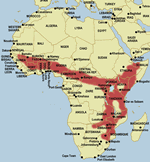
Sub-Saharan Africa
|
Countries
Benin, Botswana, Burkina Faso, Burundi, Cameroon, Central African Republic, Democratic Republic of Congo, Cote d'Ivoire ( Ivory Coast ), Ethiopia, Ghana, Guinea, Guinea-Bissau, Kenya, Malawi, Mali, Mozambique, Nigeria, Rwanda, Senegal, South Africa, Sudan, Tanzania, Togo, Uganda, Zambia, Zimbabwe, Mauritania, Somalia
|
|
|
|
|
|
Taxonomy and Biology
|
|
Adult Length: 1.05 m
|
General Shape
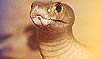
Medium to moderately large in length, cylindrical bodied snake with a moderately long to long tail. Can grow to a maximum of about 1.58 metres ( R. o. rostratus ). Head is short, distinct from neck with a prominent, hooked or beak-like, pointed snout. Head dorsum is distinctly convex when viewed from the side. Eyes are moderately large in size with round pupils. Dorsal scales are smooth with single apical pits. Dorsal scale count usually 19 - 17 - 13.
|
Habitat
Mainly sandy thornveld, bushveld, coastal thicket and dry to moist savanna grasslands and woodlands.
|
Habits
Terrestrial, diurnal and slow moving snake. Tends to take shelter in animal burrows and termite mounds.
|
Prey
Feed on a variety of small vertebrates, including rodents, small burrowing mammals, lizards and snakes.
|
|
|
|
Venom
|
General: Venom Neurotoxins
Non-venomous
|
General: Venom Myotoxins
Non-venomous
|
General: Venom Procoagulants
Non-venomous
|
General: Venom Anticoagulants
Non-venomous
|
General: Venom Haemorrhagins
Non-venomous
|
General: Venom Nephrotoxins
Non-venomous
|
General: Venom Cardiotoxins
Non-venomous
|
General: Venom Necrotoxins
Non-venomous
|
General: Venom Other
Non-venomous
|
|
|
|
Clinical Effects
|
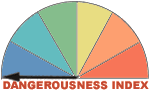
General: Dangerousness
Not likely to cause significant effects; non-lethal
|
|
General: Rate of Envenoming: Non-venomous, so essentially all bites should be "dry".
|
|
General: Untreated Lethality Rate: No lethal potential, non-venomous bite
|
General: Local Effects
Insufficient clinical reports to know, but most likely no local effects, possibly, at most, minor local pain & swelling only
|
General: Local Necrosis
Insufficient clinical reports to know, but local necrosis most unlikely
|
General: General Systemic Effects
Insufficient clinical reports to know, but systemic effects not expected
|
General: Neurotoxic Paralysis
Insufficient clinical reports to know, but unlikely to occur
|
General: Myotoxicity
Insufficient clinical reports to know, but unlikely to occur
|
General: Coagulopathy & Haemorrhages
Insufficient clinical reports to know, but unlikely to occur
|
General: Renal Damage
Insufficient clinical reports to know, but unlikely to occur
|
General: Cardiotoxicity
Insufficient clinical reports to know, but unlikely to occur
|
General: Other
Insufficient clinical reports to know
|
|
|
|
First Aid
|
|
Description: First aid for bites by non-front-fanged colubroid snakes likely to cause either no effects or only mild local effects.
|
Details
1. After ensuring the patient and onlookers have moved out of range of further strikes by the snake, the bitten person should be reassured and persuaded to lie down and remain still. Many will be terrified, fearing sudden death and, in this mood, they may behave irrationally or even hysterically. The basis for reassurance is the fact that many venomous bites do not result in envenoming, the relatively slow progression to severe envenoming (hours following elapid bites, days following viper bites) and the effectiveness of modern medical treatment.
2. The bite wound should not be tampered with in any way. Wiping it once with a damp cloth to remove surface venom is unlikely to do much harm (or good) but the wound must not be massaged.
3. All rings or other jewellery on the bitten limb, especially on fingers, should be removed, as they may act as tourniquets if oedema develops.
4. The bitten limb should be immobilised as effectively as possible using an extemporised splint or sling.
5. If there is any impairment of vital functions, such as problems with respiration, airway, circulation, heart function, these must be supported as a priority. In particular, for bites causing flaccid paralysis, including respiratory paralysis, both airway and respiration may be impaired, requiring urgent and prolonged treatment, which may include the mouth to mask (mouth to mouth) technique of expired air transfer. Seek urgent medical attention.
6. Do not use Tourniquets, cut, suck or scarify the wound or apply chemicals or electric shock.
7. Avoid peroral intake, absolutely no alcohol. No sedatives outside hospital. If there will be considerable delay before reaching medical aid, measured in several hours to days, then give clear fluids by mouth to prevent dehydration.
8. If the offending snake has been killed it should be brought with the patient for identification (only relevant in areas where there are more than one naturally occurring venomous snake species), but be careful to avoid touching the head, as even a dead snake can envenom. No attempt should be made to pursue the snake into the undergrowth as this will risk further bites.
9. The snakebite victim should be transported as quickly and as passively as possible to the nearest place where they can be seen by a medically-trained person (health station, dispensary, clinic or hospital). The bitten limb must not be exercised as muscular contraction will promote systemic absorption of venom. If no motor vehicle or boat is available, the patient can be carried on a stretcher or hurdle, on the pillion or crossbar of a bicycle or on someone's back.
10. Most traditional, and many of the more recently fashionable, first aid measures are useless and potentially dangerous. These include local cauterization, incision, excision, amputation, suction by mouth, vacuum pump or syringe, combined incision and suction ("venom-ex" apparatus), injection or instillation of compounds such as potassium permanganate, phenol (carbolic soap) and trypsin, application of electric shocks or ice (cryotherapy), use of traditional herbal, folk and other remedies including the ingestion of emetic plant products and parts of the snake, multiple incisions, tattooing and so on.
|
|
|
|
Treatment
|
Treatment Summary
Bites by this species are not expected to cause medically significant effects and the only risk, probably small, is local secondary infection. Patients presenting with bites by these snakes do not require medical attention, other than to check for infection and ensure tetanus immune status. Patients should be advised to return if local symptoms develop, suggesting secondary infection.
|
Key Diagnostic Features
Either no effects or minimal local pain & swelling only. No systemic effects.
|
General Approach to Management
While most cases will be minor, not requiring admission, some cases will be more severe, requiring admission and treatment, so assess carefully before early discharge.
|
Antivenom Therapy
No antivenom available
|
|
|